click photo to enlarge
On our recent visit to London we saw a lot of Santas. At first it was just one or two of the sort seen annually at this time of year, dressed up, out for a drink with friends, wearing as a minimum a basic red and white hat. However, these Santas, and the groups of eight to ten we saw subsequently had made more effort. Hat, jacket and trousers were worn by all with some adding a broad black belt or a home made one of tinsel. True, most of these outfits had that skimped look suggesting an origin in a Chinese factory and a price that left change out of a ten pound note. But, nonetheless they exhibited more than the usual attempt to emulate the dress sense of the man in red.
It was when we turned the corner to where the west portico of St Paul's Cathedral towers over the street that we realised there was something of a greater magnitude going on than a few friends on an outing or a themed office party taking place. There must have been three or four hundred Santas thronging the plaza, police in attendance, listening the the multitude of St Nicholas's giving enthusiastic, if discordant, renditions of well known carols. Only later, when I got home did I discover that we had inadvertently stumbled upon London Santacon 2016, a flash-mob style meeting advertised over the internet for people to congregate in London dressed as Father Christmas. The aim of the event was to provide a "non-profit, non-political, non-religious and non-sensical Christmas parade". It seemed to be quite good humoured, harmless and colourful. However, I wasn't tempted to join in this year or any year for that matter.
photograph and text © Tony Boughen
Photo Title: Revellers, London Santacon 2016
Camera: Sony RX100
Mode: Aperture Priority
Focal Length: 10.4mm (28mm - 35mm equiv.)
F No: f4
Shutter Speed: 1/30
ISO: 2000
Exposure Compensation: -0.7 EV
Image Stabilisation: On
Showing posts with label night. Show all posts
Friday, December 16, 2016
Sunday, December 11, 2016
Thoroughfares and short cuts
click photo to enlarge
On a recent day in London we spent a lot of time on the highways and by-ways of the central and north central area of the city. Highway as its name implies means "main way" or route, and a by-way is a route other than the highway i.e. a side road or a less frequented, subsidiary route. We were using the main roads to get to smaller roads and passages to see some of the less obvious architecture of London, and some of the placenames and relics of former times. The terms thoroughfare and short-cut seemed more appropriate to describe what were doing because in the hierarchy of roads, Fleet Street was as big as we got and St Swithin's Lane the smallest. "Thoroughfare" today often implies a main road because its derivation is from the word "through" and "passage", in the sense of a route that is open and unhindered. And taking short-cuts down narrow lanes was what we were doing quite frequently.
The line of many of the routes in London would be familiar to medieval city dwellers because the properties that line them are still there in some instances and have been respected by later buildings in others. St Swithin's Lane, connecting Cannon Street with King William Street, is a case in point. However, that medieval person would wonder where the old church of St Swithin that bordered the lane has gone. The answer is that the medieval building was burned down in the Great Fire of London in 1666, rebuilt in the Renaissance style by Christopher Wren, and that this building was badly damaged by bombing in the second world war, and its remains were cleared from the site in 1962. Today the buildings along the lane date from the nineteenth, twentieth and twenty-first centuries.
Our evening walk between Tube stations took us down this modern short-cut, brollies up to counter the heavier rain, our passage lit by light spilling from brightly illuminated, empty offices.
photograph and text © Tony Boughen
Photo Title: Evening, St Swithin's Lane, London
Camera: Sony RX100
Mode: Aperture Priority
Focal Length: 10.4mm (28mm - 35mm equiv.)
F No: f4
Shutter Speed: 1/30
ISO: 5000
Exposure Compensation: -0.3 EV
Image Stabilisation: On
On a recent day in London we spent a lot of time on the highways and by-ways of the central and north central area of the city. Highway as its name implies means "main way" or route, and a by-way is a route other than the highway i.e. a side road or a less frequented, subsidiary route. We were using the main roads to get to smaller roads and passages to see some of the less obvious architecture of London, and some of the placenames and relics of former times. The terms thoroughfare and short-cut seemed more appropriate to describe what were doing because in the hierarchy of roads, Fleet Street was as big as we got and St Swithin's Lane the smallest. "Thoroughfare" today often implies a main road because its derivation is from the word "through" and "passage", in the sense of a route that is open and unhindered. And taking short-cuts down narrow lanes was what we were doing quite frequently.
The line of many of the routes in London would be familiar to medieval city dwellers because the properties that line them are still there in some instances and have been respected by later buildings in others. St Swithin's Lane, connecting Cannon Street with King William Street, is a case in point. However, that medieval person would wonder where the old church of St Swithin that bordered the lane has gone. The answer is that the medieval building was burned down in the Great Fire of London in 1666, rebuilt in the Renaissance style by Christopher Wren, and that this building was badly damaged by bombing in the second world war, and its remains were cleared from the site in 1962. Today the buildings along the lane date from the nineteenth, twentieth and twenty-first centuries.
Our evening walk between Tube stations took us down this modern short-cut, brollies up to counter the heavier rain, our passage lit by light spilling from brightly illuminated, empty offices.
photograph and text © Tony Boughen
Photo Title: Evening, St Swithin's Lane, London
Camera: Sony RX100
Mode: Aperture Priority
Focal Length: 10.4mm (28mm - 35mm equiv.)
F No: f4
Shutter Speed: 1/30
ISO: 5000
Exposure Compensation: -0.3 EV
Image Stabilisation: On
Labels:
evening,
London,
night,
placenames,
rain,
St Swithin's Lane
Thursday, October 13, 2016
Burgers and snap shots
click photo to enlarge
When we were in Seville recently we came upon TGB, also known as The Good Burger, and in Spanish, La Buena Hamburguesa. What drew my attention wasn't the idea that I could have a burger from a place that positioned itself above McDonald's, Burger King and all the other fast food burger outlets, but the bold, illuminated window sign. In the dark of the evening it caught my eye because nearby it took a little effort to decipher but from across the street it was very easily read.
I'm not a patron of the mainstream burger bars. In fact, I don't frequent the upmarket competitors either, though I have had, over the years, a couple of what in London are often called "gourmet burgers"! However, I do enjoy, now and then, a burger of my wife's making. It's what I consider to be a good burger because it comprises good quality beef and tasty, nutritious bread buns that my wife has made. The meat and the bread are the essence of any good burger, and if the former is well cooked and any garnish is sufficient to complement the essentials without overpowering them, then I am usually going to be happy with the offering. I see that this particular Spanish chain prides itself on quality ingredients and their preparation. And I can see how that would appeal to some Spanish people and some visitors. But not this one: for me being in Seville involves sampling Spanish food, particularly the tapas of that city, not a food that is now an international offering. Though we didn't have a burger I did get from the shop a photograph that pleased me. It was a snap shot (not a snapshot) taking quickly as a person passed by, their silhouette breaking up the words and catching outlining illumination from the shop sign lights.
photograph and text © Tony Boughen
Photo Title: The Good Burger, Seville
Camera: Sony RX100
Mode: Aperture Priority
Focal Length: 10.4mm (28mm - 35mm equiv.)
F No: f1.8
Shutter Speed: 1/200 sec
ISO:125
Exposure Compensation: -0.3EV
When we were in Seville recently we came upon TGB, also known as The Good Burger, and in Spanish, La Buena Hamburguesa. What drew my attention wasn't the idea that I could have a burger from a place that positioned itself above McDonald's, Burger King and all the other fast food burger outlets, but the bold, illuminated window sign. In the dark of the evening it caught my eye because nearby it took a little effort to decipher but from across the street it was very easily read.
I'm not a patron of the mainstream burger bars. In fact, I don't frequent the upmarket competitors either, though I have had, over the years, a couple of what in London are often called "gourmet burgers"! However, I do enjoy, now and then, a burger of my wife's making. It's what I consider to be a good burger because it comprises good quality beef and tasty, nutritious bread buns that my wife has made. The meat and the bread are the essence of any good burger, and if the former is well cooked and any garnish is sufficient to complement the essentials without overpowering them, then I am usually going to be happy with the offering. I see that this particular Spanish chain prides itself on quality ingredients and their preparation. And I can see how that would appeal to some Spanish people and some visitors. But not this one: for me being in Seville involves sampling Spanish food, particularly the tapas of that city, not a food that is now an international offering. Though we didn't have a burger I did get from the shop a photograph that pleased me. It was a snap shot (not a snapshot) taking quickly as a person passed by, their silhouette breaking up the words and catching outlining illumination from the shop sign lights.
photograph and text © Tony Boughen
Photo Title: The Good Burger, Seville
Camera: Sony RX100
Mode: Aperture Priority
Focal Length: 10.4mm (28mm - 35mm equiv.)
F No: f1.8
Shutter Speed: 1/200 sec
ISO:125
Exposure Compensation: -0.3EV
Labels:
advertising,
lights,
night,
silhouette,
snap shot,
The Good Burger
Wednesday, January 20, 2016
Rimless spectacles
click photo to enlarge
I'm sure that there are many photographers who have wonderful digital archives that can be searched by every conceivable parameter including subject, geographical location and photographic data, allowing them to easily locate an image. I am not one of those people. Like, I suspect, the majority of photographers, I have an archival system that is better than nothing, but not good enough to allow images to be retrieved without the expenditure of time and effort. However, the occasions on which I need to retrieve an image quickly are relatively few, so I'm never motivated to expend the energy to improve matters.
Today I searched for a photograph of a wooden screen in a Norfolk church on which were painted, in the 1400s, various saints, one of whom wore spectacles (glasses). These aids to vision were invented much earlier than many people realise. The earliest pictorial representation of spectacles with converging lenses for the long-sighted dates from c.1286, as I was reminded in a book about the medieval industrial revolution that I'm currently reading. Consequently it should come as no surprise to see them represented in a painting of the fifteenth century. However, it did jolt me. In the light of what I wrote above you won't be surprised to hear that I was unable to find my photograph after ten minutes search.
Perhaps it was reading my book that caused me to notice my rimless spectacles that I'd put down on a cupboard in my darkened study. I liked the glowing colour, the way the light of the lamp illuminated them, emphasising the delicate metalwork, and I liked the contrast of the light and dark areas. The simple subject called for a shallow depth of field and so I used a long lens in my relatively small room.
photograph and text © Tony Boughen
Photo Title: Rimless Spectacles
Camera: Olympus E-M10
Mode: Aperture Priority
Focal Length: 150mm (300mm - 35mm equiv.)
F No: f5.6
Shutter Speed: 1/200 sec
ISO:6400
Exposure Compensation: -0.3 EV
Image Stabilisation: On
I'm sure that there are many photographers who have wonderful digital archives that can be searched by every conceivable parameter including subject, geographical location and photographic data, allowing them to easily locate an image. I am not one of those people. Like, I suspect, the majority of photographers, I have an archival system that is better than nothing, but not good enough to allow images to be retrieved without the expenditure of time and effort. However, the occasions on which I need to retrieve an image quickly are relatively few, so I'm never motivated to expend the energy to improve matters.
Today I searched for a photograph of a wooden screen in a Norfolk church on which were painted, in the 1400s, various saints, one of whom wore spectacles (glasses). These aids to vision were invented much earlier than many people realise. The earliest pictorial representation of spectacles with converging lenses for the long-sighted dates from c.1286, as I was reminded in a book about the medieval industrial revolution that I'm currently reading. Consequently it should come as no surprise to see them represented in a painting of the fifteenth century. However, it did jolt me. In the light of what I wrote above you won't be surprised to hear that I was unable to find my photograph after ten minutes search.
Perhaps it was reading my book that caused me to notice my rimless spectacles that I'd put down on a cupboard in my darkened study. I liked the glowing colour, the way the light of the lamp illuminated them, emphasising the delicate metalwork, and I liked the contrast of the light and dark areas. The simple subject called for a shallow depth of field and so I used a long lens in my relatively small room.
photograph and text © Tony Boughen
Photo Title: Rimless Spectacles
Camera: Olympus E-M10
Mode: Aperture Priority
Focal Length: 150mm (300mm - 35mm equiv.)
F No: f5.6
Shutter Speed: 1/200 sec
ISO:6400
Exposure Compensation: -0.3 EV
Image Stabilisation: On
Labels:
glasses,
history,
night,
spectacles,
technology
Tuesday, December 01, 2015
Tower Bridge seen from London Bridge
click photo to enlarge
One recent cold and windy night we found ourselves in London Bridge station waiting for someone. We had about forty minutes to kill so we walked out onto nearby London Bridge. After photographing the big blocky office building on the nearby south bank we walked out onto the bridge itself. It was freezing! Definitely not the weather you'd choose for photography.
The temperature was low and the wind speed high making it colder and harder to hold a camera steady. And yet, there on the bridge, besides the usual tourists taking photographs with their phones, were a few hardy photography enthusiasts, some with tripods, some without. I joined their ranks, tripodless, and started to take a few shots of the illuminated Tower Bridge, nearby HMS Belfast and the lit buildings along the shore. It quickly became apparent that a bright lens and a reasonable focal length were required. I happened to have my current portrait lens with me, the Olympus 45mm 1.8, since I'd been photographing my grand-daughter earlier in the day. It proved ideal for the job. Reasonably sharp wide open and image stabilised by the camera body.
As I took my photographs I reflected on the time when I used Four Thirds cameras without stabilisation, and without the high ISO performance of current cameras. The quality that was possible today simply with my unsupported camera body and lens was impossible only a few short years ago. The metering too has improved in leaps and bounds and it took minimal effort to achieve what I consider to be the very satisfactory result in today's photograph.
photograph and text © Tony Boughen
Camera: Olympus E-M10
Mode: Aperture Priority
Focal Length: 45mm (90mm - 35mm equiv.)
F No: f1.8
Shutter Speed: 1/100 sec
ISO:5000
Exposure Compensation: -0.3 EV
Image Stabilisation: On
One recent cold and windy night we found ourselves in London Bridge station waiting for someone. We had about forty minutes to kill so we walked out onto nearby London Bridge. After photographing the big blocky office building on the nearby south bank we walked out onto the bridge itself. It was freezing! Definitely not the weather you'd choose for photography.
The temperature was low and the wind speed high making it colder and harder to hold a camera steady. And yet, there on the bridge, besides the usual tourists taking photographs with their phones, were a few hardy photography enthusiasts, some with tripods, some without. I joined their ranks, tripodless, and started to take a few shots of the illuminated Tower Bridge, nearby HMS Belfast and the lit buildings along the shore. It quickly became apparent that a bright lens and a reasonable focal length were required. I happened to have my current portrait lens with me, the Olympus 45mm 1.8, since I'd been photographing my grand-daughter earlier in the day. It proved ideal for the job. Reasonably sharp wide open and image stabilised by the camera body.
As I took my photographs I reflected on the time when I used Four Thirds cameras without stabilisation, and without the high ISO performance of current cameras. The quality that was possible today simply with my unsupported camera body and lens was impossible only a few short years ago. The metering too has improved in leaps and bounds and it took minimal effort to achieve what I consider to be the very satisfactory result in today's photograph.
photograph and text © Tony Boughen
Camera: Olympus E-M10
Mode: Aperture Priority
Focal Length: 45mm (90mm - 35mm equiv.)
F No: f1.8
Shutter Speed: 1/100 sec
ISO:5000
Exposure Compensation: -0.3 EV
Image Stabilisation: On
Labels:
London,
London Bridge,
night,
photography,
technology,
Tower Bridge
Thursday, November 26, 2015
St Pancras at night
click photo to enlarge
Earlier this year, in May, I posted a photograph of the train shed at St Pancras station in London. Today's photograph shows the same location, from a slightly different point of view, at night. What the earlier photograph doesn't reveal is that the shot was taken through the glass wall that separates the Eurostar trains from the public areas of the building. The image above does show that through the three reflected lights that can be seen in front of the illuminated girders of the roof.
Each time I step into this station I look up in awe at the train shed roof of 1868 that was designed by William Henry Barlow. Its unbroken span was the largest in the world at the time it was built, and even in the twenty-first century, a time of architectural megastructures, it retains the power to impress. I quickly snapped this shot before we went into the nearby Booking Office Bar in St Pancras Hotel, captivated by the light and shade and grateful for the two silhouetted figures that gave the scene focus and a sense of scale. Incidentally the shot was taken with my Samyang 12mm f2 (24mm/35mm equivalence), a manual focus lens that I have had for a couple of months and which has become a firm favourite.
photograph and text © Tony Boughen
Camera: Olympus E-M10
Mode: Aperture Priority
Focal Length: 12mm (24mm - 35mm equiv.)
F No: f3.5
Shutter Speed: 1/100 sec
ISO:5000
Exposure Compensation: -0.3 EV
Image Stabilisation: On
Earlier this year, in May, I posted a photograph of the train shed at St Pancras station in London. Today's photograph shows the same location, from a slightly different point of view, at night. What the earlier photograph doesn't reveal is that the shot was taken through the glass wall that separates the Eurostar trains from the public areas of the building. The image above does show that through the three reflected lights that can be seen in front of the illuminated girders of the roof.
Each time I step into this station I look up in awe at the train shed roof of 1868 that was designed by William Henry Barlow. Its unbroken span was the largest in the world at the time it was built, and even in the twenty-first century, a time of architectural megastructures, it retains the power to impress. I quickly snapped this shot before we went into the nearby Booking Office Bar in St Pancras Hotel, captivated by the light and shade and grateful for the two silhouetted figures that gave the scene focus and a sense of scale. Incidentally the shot was taken with my Samyang 12mm f2 (24mm/35mm equivalence), a manual focus lens that I have had for a couple of months and which has become a firm favourite.
photograph and text © Tony Boughen
Camera: Olympus E-M10
Mode: Aperture Priority
Focal Length: 12mm (24mm - 35mm equiv.)
F No: f3.5
Shutter Speed: 1/100 sec
ISO:5000
Exposure Compensation: -0.3 EV
Image Stabilisation: On
Labels:
night,
platform,
railway station,
St Pancras
Sunday, November 22, 2015
Reality and reflections
click photo to enlarge
No 1 London Bridge is a building that has featured before on this blog - quite early, in 2006, and a little later in 2008. On both occasions it was a detail that I posted rather than the whole building of the monolithic office block. One day I may post a shot of it in its entirety but it won't be for any qualities that I especially admire so much as its prominent position and unusual structure.
This building has always seemed to me to be an "eyecatcher" design - a hollowed out block with a supporting "leg" whose design is primarily intended to be noticed. And in that respect it works. You can't miss it, despite the subdued, glossy, brown marble cladding and reflective glass. A quality the building possesses that I do admire is the way the reflective surfaces work together to impart complexity and confusion. Sometimes, only by looking very carefully can you discern what is real and what is reflected, especially in a photograph. Today's shot was grabbed as we passed by on a recent brief visit to the capital, and is one of the few that I have taken of the building at night.
photograph and text © Tony Boughen
Camera: Olympus E-M10
Mode: Aperture Priority
Focal Length: 12mm (24mm - 35mm equiv.)
F No: f3.5
Shutter Speed: 1/40 sec
ISO:6400
Exposure Compensation: -0.7 EV
Image Stabilisation: On
No 1 London Bridge is a building that has featured before on this blog - quite early, in 2006, and a little later in 2008. On both occasions it was a detail that I posted rather than the whole building of the monolithic office block. One day I may post a shot of it in its entirety but it won't be for any qualities that I especially admire so much as its prominent position and unusual structure.
This building has always seemed to me to be an "eyecatcher" design - a hollowed out block with a supporting "leg" whose design is primarily intended to be noticed. And in that respect it works. You can't miss it, despite the subdued, glossy, brown marble cladding and reflective glass. A quality the building possesses that I do admire is the way the reflective surfaces work together to impart complexity and confusion. Sometimes, only by looking very carefully can you discern what is real and what is reflected, especially in a photograph. Today's shot was grabbed as we passed by on a recent brief visit to the capital, and is one of the few that I have taken of the building at night.
photograph and text © Tony Boughen
Camera: Olympus E-M10
Mode: Aperture Priority
Focal Length: 12mm (24mm - 35mm equiv.)
F No: f3.5
Shutter Speed: 1/40 sec
ISO:6400
Exposure Compensation: -0.7 EV
Image Stabilisation: On
Labels:
architecture,
London,
night,
No 1 London Bridge,
offices,
reflections
Saturday, October 03, 2015
Changing corporate faces
click photo to enlarge
Whole industries are devoted to the design and implementation of corporate images. Everything from the font, logo, mission statement, colours and more are carefully constructed, tested with focus groups, modified on the basis of feedback and rolled out to what the company fondly believes is a waiting world. I'm sure some take an interest in such things, and I have to say that, up to a point, I do. But, most people, in my experience, care little about them.
However, it doesn't matter whether or not you consciously think about the corporate face a company projects because, through repeated advertising, the public gradually absorbs the information the company requires. There can be few people in the UK who don't know that the Co-operative now uses light green as its main corporate colour, and quite a few of those will remember that it was preceded by a distinctive turquoise. Familiarity with a company's corporate image doesn't breed contempt so much as indifference, and yet despite that it still does its work.When I studied today's photograph I wondered what prompted the "refresh" of the Co-op's image, and when I first came to realise that it had changed. All I remember is that I eventually came to notice the transformation. My other thought concerned Total's logo and colours - when did it change from three oblique strokes in red, blue and orange into the swirly ball shown above, and why had I not noticed in this instance? I put it down to the relative rarity of Total petrol stations compared with their competitors and the fact that as far as fuel for my car goes, like most people, I'm price-sensitive rather than brand-sensitive.
I came upon this petrol station as we walked through Settle in the Yorkshire Dales one evening. It was nestled in its own pool of light, one of the brightest points in this part of a quite dark market town.
photograph and text © Tony Boughen
Camera: Olympus E-M10
Mode: Aperture Priority
Focal Length: 12mm (24mm - 35mm equiv.)
F No: f2.8
Shutter Speed: 1/125 sec
ISO:6400
Exposure Compensation: -0.7 EV
Image Stabilisation: On
Whole industries are devoted to the design and implementation of corporate images. Everything from the font, logo, mission statement, colours and more are carefully constructed, tested with focus groups, modified on the basis of feedback and rolled out to what the company fondly believes is a waiting world. I'm sure some take an interest in such things, and I have to say that, up to a point, I do. But, most people, in my experience, care little about them.
However, it doesn't matter whether or not you consciously think about the corporate face a company projects because, through repeated advertising, the public gradually absorbs the information the company requires. There can be few people in the UK who don't know that the Co-operative now uses light green as its main corporate colour, and quite a few of those will remember that it was preceded by a distinctive turquoise. Familiarity with a company's corporate image doesn't breed contempt so much as indifference, and yet despite that it still does its work.When I studied today's photograph I wondered what prompted the "refresh" of the Co-op's image, and when I first came to realise that it had changed. All I remember is that I eventually came to notice the transformation. My other thought concerned Total's logo and colours - when did it change from three oblique strokes in red, blue and orange into the swirly ball shown above, and why had I not noticed in this instance? I put it down to the relative rarity of Total petrol stations compared with their competitors and the fact that as far as fuel for my car goes, like most people, I'm price-sensitive rather than brand-sensitive.
I came upon this petrol station as we walked through Settle in the Yorkshire Dales one evening. It was nestled in its own pool of light, one of the brightest points in this part of a quite dark market town.
photograph and text © Tony Boughen
Camera: Olympus E-M10
Mode: Aperture Priority
Focal Length: 12mm (24mm - 35mm equiv.)
F No: f2.8
Shutter Speed: 1/125 sec
ISO:6400
Exposure Compensation: -0.7 EV
Image Stabilisation: On
Labels:
corporate image,
night,
North Yorkshire,
petrol station,
Settle
Thursday, October 23, 2014
The Shambles, Settle
click photo to enlarge
Today's photograph shows a building in the centre of the small market town in Yorkshire where I was raised. It is called "The Shambles". Like the more well-known Shambles in York this name is said to derive from "shammels", the Saxon for shelves, ledges or benches. It is in the centre of the market place, a location where, in towns across Britain, you invariably find old and interesting buildings. This structure has steps at the left and right that lead down to a basement level with six shops, above that is the next level seen through the arches, where there are six more shops. Over these, reached by stone steps at the right side of the building are six, small, two-storey dwellings. The two lower floors date from the seventeenth century whilst the upper dwellings are Victorian. Over the years a couple of members of my family have lived in the Shambles.
This building, along with the former town hall of 1832, the Georgian column and drinking fountain, and the buildings that mark the periphery of the market place, all offer much of visual and historic interest to the visitor. However, like many market places across the land, it is converted (for six days of the week) into a car park that is crammed with vehicles. The exception is Tuesday - market day - when it is crammed with stalls and vehicles. Whilst one must be glad that the space continues to host a market, the permanent presence of cars really does lessen the appeal of the area. There is no respite, even at night, from the infernal combustion engine, as my smaller photograph shows. In Britain some enlightened towns that are trying to rescue these civic spaces from the car, but they are few and far between, and in Settle, below the limestone crag of Castleberg, buildings are closely packed and space is at a premium. So, to fully appreciate the town's market place it is necessary to mentally expunge the vehicles - not an easy task!
photograph and text © Tony Boughen
Photo 1
Camera: Nikon D5300
Mode: Aperture Priority
Focal Length: 20mm (30mm - 35mm equiv.)
F No: f8
Shutter Speed: 1/250 sec
ISO:100
Exposure Compensation: -0.33 EV
Image Stabilisation: On
Today's photograph shows a building in the centre of the small market town in Yorkshire where I was raised. It is called "The Shambles". Like the more well-known Shambles in York this name is said to derive from "shammels", the Saxon for shelves, ledges or benches. It is in the centre of the market place, a location where, in towns across Britain, you invariably find old and interesting buildings. This structure has steps at the left and right that lead down to a basement level with six shops, above that is the next level seen through the arches, where there are six more shops. Over these, reached by stone steps at the right side of the building are six, small, two-storey dwellings. The two lower floors date from the seventeenth century whilst the upper dwellings are Victorian. Over the years a couple of members of my family have lived in the Shambles.
This building, along with the former town hall of 1832, the Georgian column and drinking fountain, and the buildings that mark the periphery of the market place, all offer much of visual and historic interest to the visitor. However, like many market places across the land, it is converted (for six days of the week) into a car park that is crammed with vehicles. The exception is Tuesday - market day - when it is crammed with stalls and vehicles. Whilst one must be glad that the space continues to host a market, the permanent presence of cars really does lessen the appeal of the area. There is no respite, even at night, from the infernal combustion engine, as my smaller photograph shows. In Britain some enlightened towns that are trying to rescue these civic spaces from the car, but they are few and far between, and in Settle, below the limestone crag of Castleberg, buildings are closely packed and space is at a premium. So, to fully appreciate the town's market place it is necessary to mentally expunge the vehicles - not an easy task!
photograph and text © Tony Boughen
Photo 1
Camera: Nikon D5300
Mode: Aperture Priority
Focal Length: 20mm (30mm - 35mm equiv.)
F No: f8
Shutter Speed: 1/250 sec
ISO:100
Exposure Compensation: -0.33 EV
Image Stabilisation: On
Labels:
day,
market place,
night,
North Yorkshire,
old buildings,
Settle,
Shambles
Friday, March 14, 2014
Motion blur London nightime skyline
click photo to enlarge
Too many photographers, it seems to me, obsess about how sharp their camera/lens combination is. This is particularly prevalent among those new to photography. The fact is, very few photographs are ever judged deficient because they are not sharp enough. Sharpness is not usually one of the primary requisites for a good image. There are exceptions - macro photography and some kinds of landscape photography, for example, need sharpness to reveal the detail that contributes a lot to the final image. But most genres don't require the knife-edge sharpness that is too often thought desirable.
There's certainly a case to be made for the painterly effects produced by older lenses that exhibit a little softness. They can be useful for portraits, landscapes, flowers and many other subjects. There's also much to be said for blur caused by deliberately defocusing the subject. And then there's motion blur. I have a collection of photographs that I've put together where I've deliberately set a slow shutter speed to blur the subject (see these boots, this river and these reflected trees for example. I also have some where I've purposely moved my hands having set a slow shutter so that the image is traced across the frame. This effect can even occur serendipitously by accident.
Today's photograph is an example of the latter (purposeful) technique where I deliberately moved my hands from left right and up and down as I took the shot. It was taken at the same time as the smaller photograph on this recent post. I had an idea of what the camera might produce but only an idea - one is never entirely sure. What I didn't imagine was that it would produce such sharp motion blur!
photograph and text © Tony Boughen
Camera: Sony RX100
Mode: Aperture Priority
Focal Length: 37.1mm (100mm - 35mm equiv.)
F No: f4.9
Shutter Speed: 1.6 sec
ISO:400
Exposure Compensation: -0.3 EV
Image Stabilisation: On
Too many photographers, it seems to me, obsess about how sharp their camera/lens combination is. This is particularly prevalent among those new to photography. The fact is, very few photographs are ever judged deficient because they are not sharp enough. Sharpness is not usually one of the primary requisites for a good image. There are exceptions - macro photography and some kinds of landscape photography, for example, need sharpness to reveal the detail that contributes a lot to the final image. But most genres don't require the knife-edge sharpness that is too often thought desirable.
There's certainly a case to be made for the painterly effects produced by older lenses that exhibit a little softness. They can be useful for portraits, landscapes, flowers and many other subjects. There's also much to be said for blur caused by deliberately defocusing the subject. And then there's motion blur. I have a collection of photographs that I've put together where I've deliberately set a slow shutter speed to blur the subject (see these boots, this river and these reflected trees for example. I also have some where I've purposely moved my hands having set a slow shutter so that the image is traced across the frame. This effect can even occur serendipitously by accident.
Today's photograph is an example of the latter (purposeful) technique where I deliberately moved my hands from left right and up and down as I took the shot. It was taken at the same time as the smaller photograph on this recent post. I had an idea of what the camera might produce but only an idea - one is never entirely sure. What I didn't imagine was that it would produce such sharp motion blur!
photograph and text © Tony Boughen
Camera: Sony RX100
Mode: Aperture Priority
Focal Length: 37.1mm (100mm - 35mm equiv.)
F No: f4.9
Shutter Speed: 1.6 sec
ISO:400
Exposure Compensation: -0.3 EV
Image Stabilisation: On
Labels:
London,
motion blur,
night,
sharpness
Saturday, January 25, 2014
Art Deco and the Adelphi
Between the years of 1768 and 1772 the architect brothers, Robert and James Adam, built a group of Thames-side streets and grand terraces called the Adelphi. The name is very appropriate, coming from the Greek, "adelphoi", meaning brothers. The project was on a grand scale. It involved embanking the river, demolishing and removing the remains of Durham House, then building their new scheme using large amounts of their own money. The undertaking nearly bankrupted them and a lottery was needed to get them out of their financial predicament. The most striking part of the Adelphi was the riverside terrace. It stood on arched vaults and was composed in what was by then a common style - with emphasised centre and "pavilion" ends - making the whole appear rather like one majestic building or a transplanted country house. However, unlike most examples the centre and terrace ends barely projected, very shallow pilasters doing the job instead. It was rather like the Adam brothers had transplanted their interior decoration to the main elevation.
The Adelphi was demolished in the 1930s to make way for the enormous Art Deco buildings that now stand on the site of the brothers' imaginative scheme. Today's photograph shows the main pair - the Adelphi Building and Shell Mex House. Despite the great numbers of Art Deco (formerly more commonly known as Moderne) buildings that were constructed the history of twentieth century architecture sees the style as something of a disappointing dead-end. It doesn't fit neatly into the line that stretches from Gropius, through Mies and Le Corbusier, to Philip Johnson, S.O.M., Foster, Stirling, Rogers and the rest. Rather than the break with the past that these architects represent, Art Deco is seen as a continuation of classicism, an updating of it certainly, but tradition dressed in modified clothing nonetheless.
There is some truth in that point of view, but it shouldn't blind us to the decorative style and exuberance that Art Deco often displays, or to the monumentality that sometimes sits quite well alongside older buildings in a city. When I stood on the South Bank to take this photograph across the Thames I reflected that the simple, gigantic clock on Shell Mex House could belong to no other time than the 1930s, and the uplighting of both buildings seemed to work so well with their windows and their stepped back floors.
photograph and text © Tony Boughen
Camera: Sony RX100
Mode: Aperture Priority
Focal Length: 28.2mm (76mm - 35mm equiv.)
F No: f5
Shutter Speed: 1/80 sec
ISO:800
Exposure Compensation: -1.0 EV
Image Stabilisation: On
Labels:
1930s architecture,
Adelphi,
Art Deco,
London,
moderne,
night,
Robert Adam,
Shell Mex,
Thames
Thursday, December 12, 2013
Advertising and happiness
Modern advertising has always intrigued me. One of my early blog posts, in 2006, was called "Gullibility and advertising". I returned to the subject via product names in 2010 in the post, "Silly brand names and pier views". In 2012 "Underpants, celebrities and gibberish" found me reflecting on no less than David Beckham's boxer briefs, and in April of this year the sight of people volunteering to stand under artificially created rain while fake thunder and lightning crashed and flashed about them prompted "Advertising puzzles me". Advertising is so ubiquitous and, it must be said, often so clever, that we often fail to register it at a conscious level. However, at a subconscious level it feeds on us like a tapeworm, gnawing away at our very being, influencing what we buy, why we buy it and changing our perception of just what a product can do for us.
Many years ago I came to the conclusion that one of the main aims of advertising was to obscure the distinction between pleasure and happiness. We see this in the cliche of a new car being sold through a film of a young couple driving down an empty road in beautiful, sunny countryside, smiling beatitudinously, as though blessed with all the happiness that it is possible for life to confer upon them. Buy this car, the subtext says, and you will be like them. Or buy the wrist-watch that George Clooney advertises and you'll be like him. Or happiness is yours if only you wear this or that brand of clothing, eat at our restaurant, or live in our exclusive residential development. The fact is, that advertisements rarely give you straightforward, factual information about the product they are trying to sell. Instead they tell a fictional story about achieving happiness, pleasure, status or a life-changing experience, in which you are encouraged to see yourself as the main character, the person who is transformed by something as simple and easy as a purchase. At the heart of much advertising, it must be said, is dishonesty.
That thought was sparked the other day when we were in London. We were heading for Waterloo tube station one evening and passed the British Film Institute's IMAX cinema, a large circular building with illuminated, wrap-around advertising. The word "Honestly" was part of an advert for I know not what. And, as I raised my camera to photograph the building with a cluster of London Transport double-deckers below it, I wondered whether honesty figured anywhere in the pitch being made to we passers-by.
photograph and text © Tony Boughen
Camera: Sony RX100
Mode: Aperture Priority
Focal Length: 24.1mm (65mm - 35mm equiv.)
F No: f4
Shutter Speed: 1/125 sec
ISO: 800
Exposure Compensation: 0 EV
Image Stabilisation: On
Labels:
advertising,
bus,
IMAX,
London,
night
Tuesday, November 26, 2013
Incidental photographs
click photo to enlarge
Some of my best images I think of as "incidental photographs". That is to say, they came about when I was engaged in other business. In other words, I hadn't gone out with the express intention of taking photographs, I had other things in mind, but I had a camera with me "just in case". If I'm visiting my family in another part of the country I carry one. Shopping in town or city, one is with me. When I take the car for its service a camera is in my pocket. If I ... well you get the picture. And so do I!! It's an often repeated truism that the best camera is the one you have with you and, by and large, I've learnt my lesson on that score.
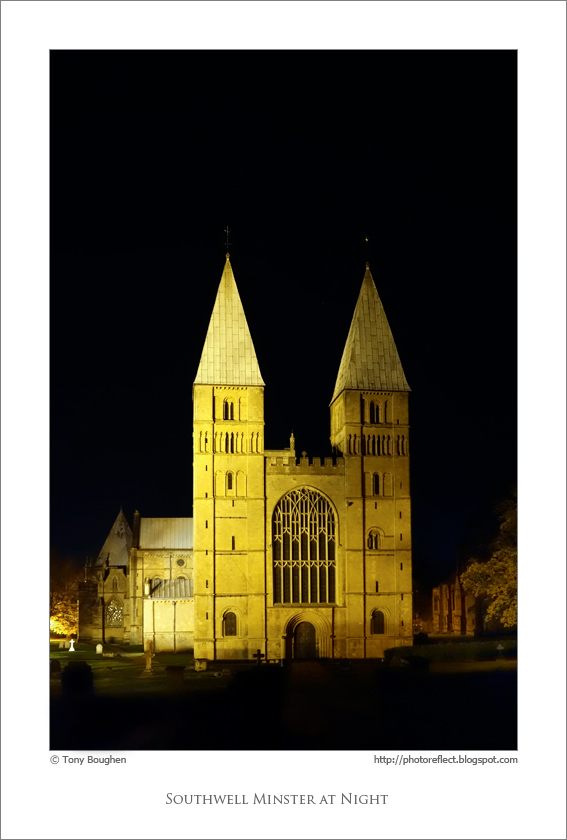
I've done this for more years than I care to remember, and my "go everywhere and anywhere" camera has always been a reasonable quality, small, pocketable device. It's currently a Sony RX100. Prior to that it was a Panasonic Lumix LX3. I had the Sony with me recently when we popped into Spalding for some shopping and I took a photograph of the Sessions House, a stone-built, castle-like, court building of 1842 by Charles Kirk senior, as the low sun illuminated the leaves of a nearby tree. I also had it when we visited Southwell in Nottinghamshire one evening and we came upon the Minster, a Norman and later church of cathedral size, floodlit in its leafy precinct. Of course there is the odd occasion when I forget to carry it, and it's then that opportunities for a photograph are seen and lost. And, like the fisherman who loses the big fish, the lost photograph takes on ever more impressive qualities the more you think about what might have been. Neither of these photographs are ever going to feature in my top ten or even top one hundred photographs. But both have qualities that I like and that, I think, make them good enough to post on the blog.
photograph and text © Tony Boughen
Photo 1
Camera: Sony RX100
Mode: Aperture Priority
Focal Length: 13.6mm (37mm - 35mm equiv.)
F No: f2
Shutter Speed: 1/8 sec
ISO: 2000
Exposure Compensation: 0 EV
Image Stabilisation: On
Some of my best images I think of as "incidental photographs". That is to say, they came about when I was engaged in other business. In other words, I hadn't gone out with the express intention of taking photographs, I had other things in mind, but I had a camera with me "just in case". If I'm visiting my family in another part of the country I carry one. Shopping in town or city, one is with me. When I take the car for its service a camera is in my pocket. If I ... well you get the picture. And so do I!! It's an often repeated truism that the best camera is the one you have with you and, by and large, I've learnt my lesson on that score.
I've done this for more years than I care to remember, and my "go everywhere and anywhere" camera has always been a reasonable quality, small, pocketable device. It's currently a Sony RX100. Prior to that it was a Panasonic Lumix LX3. I had the Sony with me recently when we popped into Spalding for some shopping and I took a photograph of the Sessions House, a stone-built, castle-like, court building of 1842 by Charles Kirk senior, as the low sun illuminated the leaves of a nearby tree. I also had it when we visited Southwell in Nottinghamshire one evening and we came upon the Minster, a Norman and later church of cathedral size, floodlit in its leafy precinct. Of course there is the odd occasion when I forget to carry it, and it's then that opportunities for a photograph are seen and lost. And, like the fisherman who loses the big fish, the lost photograph takes on ever more impressive qualities the more you think about what might have been. Neither of these photographs are ever going to feature in my top ten or even top one hundred photographs. But both have qualities that I like and that, I think, make them good enough to post on the blog.

photograph and text © Tony Boughen
Photo 1
Camera: Sony RX100
Mode: Aperture Priority
Focal Length: 13.6mm (37mm - 35mm equiv.)
F No: f2
Shutter Speed: 1/8 sec
ISO: 2000
Exposure Compensation: 0 EV
Image Stabilisation: On
Labels:
architecture,
autumn,
church,
flood lit,
leaves,
Lincolnshire,
medieval,
night,
Sessions House,
Southwell Minster,
Spalding
Friday, March 08, 2013
Testing 1, 2
click photo to enlarge
Television in the UK seems so much less adventurous than it was in the 1960s and 1970s or even the 1980s. Despite hundreds of channels operating 24 hours a day I often find there is nothing that I want to watch. Maybe it's me. But perhaps it isn't. Where, today, is the commissioning editor who would fund not just one series but multiple series' by the likes of Neil Innes or Alexei Sayle? Who would recognise the acute observation and quirky brilliance of Innes' musical offerings, or Alexei's in-your-face barrage of invective that pricked the inflated self-regard of the English middle classes, and then go on to persuade a channel that it would soon find a relatively small, but very partisan and dedicated audience?
So dire is today's television that sometimes I use YouTube as my source of entertainment, and often find myself listening to Neil Innes wonderful musical parodies or Alexei Sayle's assault on politics or the vagaries of modern life. I was doing so the other day when I stumbled once more on a throw-away piece by Neil Innes, less than a minute long, but one that is so well-observed, re-creating as it does the kind of semi-professional band that used to be found touring English working men's clubs or performing at weddings. It's not laugh out loud stuff like "Protest Song", "Godfrey Daniel" or "Crystal Balls", but it always raises a smile on my face.
And the connection with today's photograph of a churchyard at twenty two minutes past seven on a recent dark and slightly wet evening is...? Well, that piece of music is called "Testing 1, 2", and in taking my photograph in such unpromising circumstances I was doing something I hardly ever do: I was testing a feature on the Sony RX100. The only testing of kit that I undertake involves looking at my photographs, drawing conclusions about the success or otherwise of the camera in those circumstances, and modifying (or not) my practice accordingly. Here I was trying out the Superior Intelligent Auto mode (what a name!) that, in dim or dark conditions takes several quick exposures after one press of the shutter button and then makes an amalgamated shot of those images that attempts to cancel out the noise. This noise cancelling technology has been available on some cameras for a few years, though on none I've owned. I do have software for a dedicated film and negative scanner that makes 2,4,8 or 16 passes to achieve the same thing and that works very well. The result of my test is that the Sony mode is pretty effective too and much, MUCH quicker.
photograph and text © Tony Boughen
Camera: Sony RX100
Mode: iAuto+
Focal Length: 10.4mm (28mm - 35mm equiv.)
F No: f1.8
Shutter Speed: 1/4
ISO: 3200
Exposure Compensation: 0 EV
Image Stabilisation: On
Television in the UK seems so much less adventurous than it was in the 1960s and 1970s or even the 1980s. Despite hundreds of channels operating 24 hours a day I often find there is nothing that I want to watch. Maybe it's me. But perhaps it isn't. Where, today, is the commissioning editor who would fund not just one series but multiple series' by the likes of Neil Innes or Alexei Sayle? Who would recognise the acute observation and quirky brilliance of Innes' musical offerings, or Alexei's in-your-face barrage of invective that pricked the inflated self-regard of the English middle classes, and then go on to persuade a channel that it would soon find a relatively small, but very partisan and dedicated audience?
So dire is today's television that sometimes I use YouTube as my source of entertainment, and often find myself listening to Neil Innes wonderful musical parodies or Alexei Sayle's assault on politics or the vagaries of modern life. I was doing so the other day when I stumbled once more on a throw-away piece by Neil Innes, less than a minute long, but one that is so well-observed, re-creating as it does the kind of semi-professional band that used to be found touring English working men's clubs or performing at weddings. It's not laugh out loud stuff like "Protest Song", "Godfrey Daniel" or "Crystal Balls", but it always raises a smile on my face.
And the connection with today's photograph of a churchyard at twenty two minutes past seven on a recent dark and slightly wet evening is...? Well, that piece of music is called "Testing 1, 2", and in taking my photograph in such unpromising circumstances I was doing something I hardly ever do: I was testing a feature on the Sony RX100. The only testing of kit that I undertake involves looking at my photographs, drawing conclusions about the success or otherwise of the camera in those circumstances, and modifying (or not) my practice accordingly. Here I was trying out the Superior Intelligent Auto mode (what a name!) that, in dim or dark conditions takes several quick exposures after one press of the shutter button and then makes an amalgamated shot of those images that attempts to cancel out the noise. This noise cancelling technology has been available on some cameras for a few years, though on none I've owned. I do have software for a dedicated film and negative scanner that makes 2,4,8 or 16 passes to achieve the same thing and that works very well. The result of my test is that the Sony mode is pretty effective too and much, MUCH quicker.
photograph and text © Tony Boughen
Camera: Sony RX100
Mode: iAuto+
Focal Length: 10.4mm (28mm - 35mm equiv.)
F No: f1.8
Shutter Speed: 1/4
ISO: 3200
Exposure Compensation: 0 EV
Image Stabilisation: On
Labels:
Alexei Sayle,
church,
mode,
Neil Innes,
night,
sensor noise,
Sony RX100,
Superior Intelligen Auto
Monday, December 24, 2012
And so this is Christmas
click photo to enlarge
Christmas has crept up on me this year. I noticed it coming on a few occasions, but deliberately put it out of my mind except when making and writing a few cards, buying some presents and doing the shopping. Then, suddenly, out of almost nowhere, it's Christmas Eve. My wife has done many of the necessaries required to make Christmas as it should be, and for that I am, once again, grateful. How she puts up living with Scrooge, I don't know!
The appeal of Christmas has declined for me over the years. It's the conspicuous consumption that it entails and the interruptions to my routine that it presents, but mostly because it rarely compares to the Christmases that I so enjoyed when our children were young. Perhaps - and I've just thought of this - Christmas makes me feel my age. Last year I quite enjoyed it and next year, well, who knows? Of course, I'm not alone in my ambivalence towards the festive season. Charles Dickens, whose books both celebrated and helped to define the modern Christmas also had this to say about it (through his character, Scrooge): "Every idiot who goes about with 'Merry Christmas' on his lips should be boiled with his own pudding, and buried with a stake of holly through his heart." If that sounds a touch too misanthropic (and I have to say I wouldn't endorse it!) let me make it even more so with Gore Vidal's Christmas greeting: "Meretricious and a Happy New Year", and Samuel Butler's prayer: "Forgive us our Christmases as we forgive those that Christmas against us."
Today's main photograph is the only shot I have from this year that has any connection with the festive season. The two Christmas trees with lights standing on the front of Inigo Jones' superlative building of 1616-19, Queen's House in Greenwich Park, London, are my excuse for posting this image today. However, when I think about it, this post could also be an example to support the thesis of my blog post of earlier this year, "Look behind you", because the shot of Christopher Wren's Old Royal Naval College (formerly the Royal Hospital for Seamen) of 1696-1712, were taken from precisely the same spot as the Queen's House photograph, but looking in the opposite direction
After the downbeat opening of this post perhaps a little uplift is required, so here, in conclusion, are four of my favourite Christmas jokes:
"I bought my kids a set of batteries for Christmas with a note attached saying, 'Toys not included'". Anon
"My mother in law has come round to our house at Christmas seven years running. This year we're having a change. We're going to let her in." Les Dawson
"Aren't we forgetting the true meaning of Christmas - the birth of Santa?" Bart Simpson
"It will be a traditional Christmas with presents, crackers, doors slamming and people bursting into tears, but without the dead thing in the middle. We're vegetarians." Victoria Wood
photograph and text © Tony Boughen
Photo 1
Camera: Canon
Mode: Aperture Priority
Focal Length: 40mm
F No: f6.3
Shutter Speed: 1/13
ISO: 3200
Exposure Compensation: -0.33 EV
Image Stabilisation: On
Christmas has crept up on me this year. I noticed it coming on a few occasions, but deliberately put it out of my mind except when making and writing a few cards, buying some presents and doing the shopping. Then, suddenly, out of almost nowhere, it's Christmas Eve. My wife has done many of the necessaries required to make Christmas as it should be, and for that I am, once again, grateful. How she puts up living with Scrooge, I don't know!
The appeal of Christmas has declined for me over the years. It's the conspicuous consumption that it entails and the interruptions to my routine that it presents, but mostly because it rarely compares to the Christmases that I so enjoyed when our children were young. Perhaps - and I've just thought of this - Christmas makes me feel my age. Last year I quite enjoyed it and next year, well, who knows? Of course, I'm not alone in my ambivalence towards the festive season. Charles Dickens, whose books both celebrated and helped to define the modern Christmas also had this to say about it (through his character, Scrooge): "Every idiot who goes about with 'Merry Christmas' on his lips should be boiled with his own pudding, and buried with a stake of holly through his heart." If that sounds a touch too misanthropic (and I have to say I wouldn't endorse it!) let me make it even more so with Gore Vidal's Christmas greeting: "Meretricious and a Happy New Year", and Samuel Butler's prayer: "Forgive us our Christmases as we forgive those that Christmas against us."
Today's main photograph is the only shot I have from this year that has any connection with the festive season. The two Christmas trees with lights standing on the front of Inigo Jones' superlative building of 1616-19, Queen's House in Greenwich Park, London, are my excuse for posting this image today. However, when I think about it, this post could also be an example to support the thesis of my blog post of earlier this year, "Look behind you", because the shot of Christopher Wren's Old Royal Naval College (formerly the Royal Hospital for Seamen) of 1696-1712, were taken from precisely the same spot as the Queen's House photograph, but looking in the opposite direction
After the downbeat opening of this post perhaps a little uplift is required, so here, in conclusion, are four of my favourite Christmas jokes:
"I bought my kids a set of batteries for Christmas with a note attached saying, 'Toys not included'". Anon
"My mother in law has come round to our house at Christmas seven years running. This year we're having a change. We're going to let her in." Les Dawson
"Aren't we forgetting the true meaning of Christmas - the birth of Santa?" Bart Simpson
"It will be a traditional Christmas with presents, crackers, doors slamming and people bursting into tears, but without the dead thing in the middle. We're vegetarians." Victoria Wood
photograph and text © Tony Boughen
Photo 1
Camera: Canon
Mode: Aperture Priority
Focal Length: 40mm
F No: f6.3
Shutter Speed: 1/13
ISO: 3200
Exposure Compensation: -0.33 EV
Image Stabilisation: On
Labels:
Christmas,
Greenwich,
humour,
London,
night,
Old Royal Naval College,
Queen's House
Sunday, April 01, 2012
Night in the city
click photo to enlarge
"Night in the city looks pretty to me,Night in the city looks fine.
Music comes spilling out into the street,
Colors go waltzing in time."
from the song, Night in the City by Joni Mitchell (1968)
The countryside figured very large in my childhood and teenage years. Unlike most of my contemporaries who were aching to be off to the major towns and cities where more happened, I was very happy with my rural surroundings. I appreciated the beauty, the opportunity for outdoor solitude, the natural history and, in most cases, the community that rural living entails. In fact, and on the basis of fairly limited experience, I imagined that I didn't like urban areas much at all. But, when I eventually went to live in a city, I found that I liked it just fine: it wasn't worse, it was just different. Some things were not as good, of course, noise and traffic for example; but some things were better, such as the ease of meeting like-minded people and the wide range of visual stimuli.
That latter advantage isn't, I guess, one that most people would list among the benefits of city life. But for a person who has wide-ranging interests and derives great value and enjoyment from what he sees around him, it immediately hit me right between the eyes as well as in them! The fact is, cities have so much to look at and what there is to see is always changing.This facilitates photography because there is always something at which you can point your camera. So it's perhaps not surprising that I regularly head out from my rural Lincolnshire fastness towards the larger towns and cities, as much for photographic reasons as any other. Having a son living in London means that I go to the capital fairly regularly and as far as UK cities go none is bigger.
It was on my most recent visit, when walking on the south bank of the very full River Thames one evening, looking at the sparkling towers of Canary Wharf, that the words of Joni Mitchell's song chorus, quoted above, came to me. "Night in the City" seems to me to be one of those songs that have been somewhat forgotten, which is a pity because it is melodic, basically simple yet with some complexity, is distinctive, has great honky-tonk style piano, time-signature changes, and a strong contrast between verse and chorus. It's perhaps that it was written for her own vocal style and range, and fits it so well, that other singers cover it much less than formerly. It must be time for that to change!
photograph and text (c) T. Boughen
Camera: Canon
Mode: Aperture Priority
Focal Length: 32mm
F No: f5.6
Shutter Speed: 1/10 sec
ISO: 3200
Exposure Compensation: -0.33 EV
Image Stabilisation: On
Wednesday, January 18, 2012
Living with vapour trails
click photo to enlarge
One recent cold and frosty morning, as I went out into the garden to feed the birds, I chanced to look up and saw a curving vapour trail that was being made by an aircraft heading away from me. It was an odd route for a four-engined jet to be on, and as I studied the sky I noticed the remnants of a couple more such trails slowly de-materialising. Looking closer to the horizon I could see more curved trails whose positions suggested they were part of the same trails nearer to me: clearly one or more aircraft was flying in large circles over Lincolnshire and the nearby sea.Some of the bigger RAF bases are in the county so unusual vapour trails are a common sight. However, it was immediately clear to me that there was only one four-engined military aircraft that would deliberately fly in circles, at great height. I took a pair of binoculars outside to get a better look and my suspicion was confirmed: a Boeing Sentry AEW1 (AWACS) with its large radome slowly revolving above it was flying in a circle that must have been twenty, thirty or perhaps more miles in diameter. It was clearly participating in some kind of exercise, monitoring and controlling other aircraft and perhaps shipping or land forces below. Either that or we were being invaded!
In one of my first blog posts (actually the eighth, in December 2005) I sounded off about vapour trails, calling them, as far as a photographer is concerned, aerial graffiti, and suggesting that "only rarely do they add something to the image." My view of them hasn't changed since then. I find them an unwanted intrusion much more often than they are an element that I want to include in a composition. But, I have made a few images where vapour trails are, I think, key to their success. This landscape and this semi-abstract of a fairground ride are a couple that come to mind.
However, vapour trails, I discovered recently, aren't always so obviously intrusive. In saying that I'm not referring to those that are so dishevelled that they look like clouds. A few days ago, after I'd taken a speculative shot of the moon through some nearby ash trees and a veil of thin cloud, I noticed near the bottom of the brighter part of the photograph, a wavy vapour trail. As I studied it I reflected that you aren't even free of the wretched things when you're photographing at night!
photograph and text (c) T. Boughen
Camera: Canon
Mode: Aperture Priority
Focal Length: 300mm
F No: f5.6
Shutter Speed: 1/10 sec
ISO: 3200
Exposure Compensation: -1.00 EV
Image Stabilisation: On
Labels:
aircraft,
moon,
night,
night photography,
silhouette,
vapour trails
Wednesday, May 11, 2011
A quick visit to A & E
click photo to enlarge
On a recent brief evening visit to the nearest Accident and Emergency department at Boston's Pilgrim Hospital, I grabbed a quick photograph of the building with my pocket camera. And, as I sat in the waiting area I fell to thinking about the such establishments, especially those built in the 1960s and 1970s.Pevsner records that the design for Pilgrim Hospital was selected in competition in 1961, the winner being the work of the Building Design Partnership. But he also notes that it was built quite differently because of an enlarged site and revised accommodation requirements. The first phase went up in 1967-70 and the second in 1972-74. A third phase was added in 1985-87. From a distance all one sees across the flat Fens is the dominant slab of the 10-storey ward block, but from close by the expanse of single-storey departments becomes evident. What was it about these decades, I wondered, that resulted in hospitals that look like office blocks or Le Corbusier's Unite d'Habitation? Perhaps it was the wish to depart from the grim Gothic and Italianate edifices of the nineteenth century and the homely "cottage hospital" style of the inter-war years. Maybe the desire was to be forward-looking, modern, scientific and rational. Maybe too, at a psychological level there was the desire to convince the users that here is a building staffed by professionals, another world where all sorts of life-saving and life-enhancing treatments are adminstered, a place where you can put your trust in those who work there. Every profession seeks to amplify the prestige and power that attaches to them, those involved in medicine no less than bankers, and perhaps this too was part of the rationale behind the kind of architecture that can be be seen across the country from Hull to Cardiff to Preston to Ipswich. Or was it simply a following of fashion by the architectural profession?
I took my photograph from the car park. The lighting coming from the remnants of the day and fluorescent bulbs stetched the camera to the limit, resulting in a fairly grainy image. Noise suppression introduced a touch of "water colour effect", but the combination of tree silhouettes, cars, lights and the grid of illuminated windows of the main hospital building produced a shot that doesn't entirely displease me.
photograph and text (c) T. Boughen
Camera: Lumix LX3
Mode: Aperture Priority
Focal Length: 6.3mm (30mm/35mm equiv.)
F No: f2.2
Shutter Speed: 1/8
ISO: 800
Exposure Compensation: 0 EV
Image Stabilisation: On
Labels:
Boston,
Lincolnshire,
night,
Pilgrim Hospital
Tuesday, March 01, 2011
Evening on the River Thames

click photo to enlarge
During the early part of my life the Pool of London was a place of commercial river traffic. Freighters would load and unload into riverside warehouses, barges would to and fro bringing and taking the requirements of a variety of businesses throughout the centre of the capital. The nearby docks at Wapping were bustling centres of activity. But no more. London's "Docklands" is now an area of high-rise offices, high-cost flats, and financial services-derived wealth. The water that once held hard-working commercial craft is now either filled in, remain as scenic ponds, or serve as the base for pleasure craft. Today's freighters are largely restricted to the downstream docks and river around Tilbury, Dartford, Thames Haven etc.In recent years, when I've stayed in London, my location on the river has allowed me to watch the range of traffic that still uses this essential artery. What I see is mainly tourist craft showing visitors the sights, water taxis ferrying people up and down (and across) the river, and a motley collection of small boats - police launches, small power boats, rowing club sculls etc. The occasional large naval vessel and smaller cruise liner sometimes ventures up as far as Tower Bridge. Commercial traffic in the old sense is largely absent, with one exception: a regular sight is tug boats pulling barges loaded with yellow metal containers. These hold Londoners' domestic waste, and they are essentially river-borne "dustcarts", taking their cargo for disposal. In the past year four new vessels have taken over these duties, and from 2011 they carry sorted refuse to a riverside "energy from waste" electricity generating station at Belvedere, rather than to a landfil site.
Looking out over the river one recent evening a tug and its load came slowly into view on the ebbing tide. Further out into the river a Thames Clipper catamaran ferry roared by. With a bit of quick camera juggling, and bracing myself against the balcony wall, I managed to get this shot of both craft motion-blurred against the backdrop of the Thames, its riverside flats and the distant City.
photograph and text (c) T. Boughen
Camera: Canon
Mode: Aperture Priority
Focal Length: 35mm
F No: f7.1
Shutter Speed: 1/2 sec
ISO: 3200
Exposure Compensation: -0.33 EV
Image Stabilisation: On
Labels:
London,
motion blur,
night,
River Thames,
tug boat,
waste
Friday, November 20, 2009
In praise of pocket cameras
click photo to enlargeAll through my adult life I've used single lens reflex cameras (film then digital) alongside a pocketable compact camera (also film, then digital). At times I've concentrated on the smaller camera and given the heavier and bulkier SLR a break. There are those who can see no advantage in using a camera that offers less detailed output and is more restrictive in the subjects that it can deal with. However, the discipline of composing images with a restricted focal length lens fixed to a device that can accompany you with ease everywhere that you go is quite liberating; something that takes you back to the earlier days of photography, and makes you really think about your subjects and, especially, your compositions. And, for those who can't envisage life without a wide-range zoom lens, don't forget that a single focal length lens will zoom: all you have to do is walk forwards or backwards!
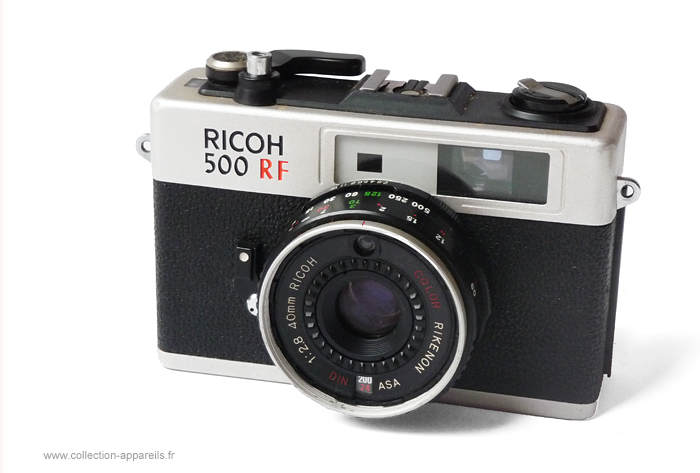
I've been using the Lumx LX3 more in recent months, and in so doing I've experienced something of the pleasure that I used to get from using a rangefinder film camera - in my case the Ricoh 500RF. That particular model had a fixed 40mm lens whilst the LX3 has a relatively short zoom of 24mm-60mm (35mm equiv.). However, I find the handling and the subjects that suit the camera are not too dissimilar. On my recent visit to London I tried the LX3 with a subject I've photographed with the E510 and posted last year - the Millennium Footbridge that crosses the Thames between Tate Modern and St Paul's Cathedral. I passed this location a little later in the day this year, so there was less light. Nonetheless, I thought I'd try the view with a hand-held shot to see how the little camera performed. There's no doubt that a big SLR with a bigger sensor, wider lens and consequent better high ISO capabilities would have secured a sharper, less noisy shot. But, such a camera might have been languishing at home whereas this one is always in my pocket! All things considered I think the LX3 produced quite a good result.
photograph & text (c) T. Boughen
Camera: Lumix LX3
Mode: Aperture Priority
Focal Length: 12.8mm (60mm/35mm equiv.)
F No: f2.8
Shutter Speed: 1/8
ISO: 800
Exposure Compensation: -0.3 EV
Image Stabilisation: On
Subscribe to:
Posts (Atom)


,-Greenwich,-London.jpg)