Showing posts with label compact cameras. Show all posts

Thursday, February 14, 2013

In praise of things compact

click photo to enlarge
One evening a few years ago, as I sat at my computer in the glow from the screen and the nearby anglepoise light, I accidentally nudged a stack of compact discs causing them to slide across the desk. I'd placed them upside down, and as they came to rest the lights created individual rainbows on the clear, silvery underside of each one. Never a person to miss an opportunity for a photograph I took several and posted one on the blog.

I recalled that event the other evening as I was photographing the inside of a cut glass wine goblet. It had caught my eye as a potential photographic subject when I was washing up a little earlier. The faceted edges of the patterns in the bowl of the glass were making rainbow-like prismatic effects. I rested my camera on the top of the glass with the lens inside it and used the timer to take a few shots. I was moderately pleased with the outcome, but a little underwhelmed by the rainbows. So, remembering the episode with the compact disks I found one, placed it, shiny side up, under the stem and foot of the glass, and took a few more photographs. Today's image is the best of the bunch. I moved the camera a little for this one to spoil the symmetry and introduce a little contrast with the out of focus side of the glass.

As I reviewed my shots on the computer I reflected that many photographic enthusiasts disparage compact cameras, their tiny sensors and their allegedly more limited capabilities compared with DSLRs. However, if like me on this occasion, you want to take a quick, experimental shot, with good depth of field and possibly macro capability, then they are hard to beat. So join me in a glass and give a little praise for both compact discs and compact cameras!

photograph and text © Tony Boughen

Camera: LX3
Mode: Aperture Priority
Focal Length: 5.1mm (24mm - 35mm equiv.)
F No: f2
Shutter Speed: 1/30
ISO: 80
Exposure Compensation:  -0.33 EV
Image Stabilisation: On

Wednesday, November 21, 2012

Cameras and coffee

click photo to enlarge
I've been idly thinking of replacing my Lumix LX3. Recent compact cameras, notably the Sony RX100, offer a much improved feature set in a similar sized body. In particular, the low light performance is considerably better, as is the video. Those are characteristics that would give me greater success in my evening photography in London and elsewhere, and with the photography I do with my grand-daughter.

However, though I could open my wallet and buy that particular camera, or another model that gave me better image quality, I won't at the moment. Why? Well, first of all there's the relative price. I judge the newer offerings to be too expensive. I'm sure others will disagree, but when it comes to spending my money then it's mainly about me! The manufacturers set the opening price of new cameras high, and they almost always fall, sometimes by an enormous amount. The Sony's price has dropped significantly already, and will, I'm sure keep going down. If it approaches my mental "guide price" I will consider it. Of course, the other thing holding me back is the fact that I know that while the surface qualities of low light shots from a new camera would be better than I get from the LX3, the more important photographic qualities will be no different. In other words, a new camera won't make me a better photographer. And lastly, while my old (in digital terms) camera produces shots like today's, this one, or this, that satisfy me greatly, then why bother.

I apply this kind of thinking to lots of things I buy. I have a guide price for coffee, for example, and won't pay what I think is the ridiculous amount asked by the bigger chains such as Costa, Caffé Nero, Starbucks etc (Starbucks' attitude to paying UK corporation tax is another reason to stay away from them.) As a consequence our coffee drinking is done in locally run shops and cafés such as the one above in Spalding, Lincolnshire. I took today's shot there as we ascended the stairs. The low viewpoint accentuated the coffered, concrete ceiling, and the single diner - others are out of shot - added the human interest I wanted in the photograph.

photograph and text © Tony Boughen

Camera: LX3
Mode: Aperture Priority
Focal Length: 12.8mm (60mm - 35mm equiv.)
F No: 2.8
Shutter Speed: 1/160
 ISO: 80
Exposure Compensation:  -0.33 EV
Image Stabilisation: On 

Sunday, May 06, 2012

Always carry a camera

click photos to enlarge
In recent years I've missed two great photographs because I forgot to follow my own advice and always carry a camera. I've probably missed more than two, but it's two particular missed opportunities that stick in my mind and make me always take a compact camera when I don't carry the DSLR.

The first was a steeplejack climbing the ladders he'd fixed that extended half way up a tall church spire. Across his back, at right angles to his body, this precarious figure was carrying the next section of ladder that needed to be put in place. It would have made a great shot. The second was the surreal sight of a long - about 100 metres - strip of  plastic snaking through the air fifty feet or so above a solitary bungalow. A strong wind had detached this vegetable cloche/cover from a field and was propelling it, very gracefully, almost in slow-motion, through the air. Remarkably it maintained a constant height as it writhed and twisted in the wind. It looked very odd, and would have made an interesting short film clip as well as an unusual photograph.

Today's shot has none of the unusual features that would have characterised the "shots that got away". However, the line of brown ducklings and their white mother, striding purposefully through the main thoroughfare of a busy retail park like a crocodile of school children with their teacher, made me reach into my pocket for my camera and grab these two photographs; the first as they approached with an over-eager duckling dashing ahead, the second as they departed, the impatient duckling now firmly put in its proper place, in the line with its siblings, following mother. It surely must be mother, mustn't it?

photograph and text (c) T. Boughen

Photo 1
Camera: Lumix LX3
Mode: Aperture Priority
Focal Length: 8.8mm (41mm/35mm equiv.)
F No: f3.5
Shutter Speed: 1/500
ISO:80
Exposure Compensation: -0.33 EV
Image Stabilisation: On

Tuesday, January 19, 2010

In praise of small sensor cameras

click photo to enlarge
Those who use digital SLRs often have no time for small sensor cameras. Not only do they lament the lack of control that compacts offer, they also bemoan their low-light abilities, the image quality and the difficulty in producing out of focus backgrounds - what is today called "bokeh". I use both a DSLR and a compact digital camera, just as for a couple of decades I used a 35mm SLR and a compact rangefinder camera. Why did I then - and why do I now - accept the limitations of a small camera? The answer is simple: convenience, and because usually what it produces is good enough.

Take the LX3 that I use. It has what many see as a woefully short zoom (24mm-60mm in 35mm terms), but that's a range that covers about 80% of my photography. Moreover, the limitation is actually liberating, and interestingly I find myself using 24mm much of the time and ignoring the rest of the zoom. Additionally, with most of my shots I'm aiming to maximise the depth of field, so for me the "disadvantage" of the small sensor becomes an advantage. The maximum aperture of the LX3 is f2. In the days of SLRs that wasn't anything special, with 50mm f1.8 lenses being two a penny, and f1.4 and f1.2 being not too uncommon. Today though, f2 is wider than probably 90% of DSLR lenses. Then there's the image quality, noise, etc. The LX3 output isn't as good as a DSLR: that much is obvious if you view images on screen at 100%. However, that's not the way I look at photographs. At the usual screen size I see no difference, and in prints up to A3+ I struggle to see a difference, so the output, for my purposes, is clearly good enough. Where the LX3 really scores is in its pocketability - it can go everywhere I go with no inconvenience. But there's also the quality of the straight out-of-the-camera JPEGs and the very effective iA (Intelligent Auto) mode. Because it's an enthusiast's compact the user control and the ability to customise the set up are at the level of many DSLRs. All told its a good little camera that is, yes, good enough. Having said that, I couldn't see myself with a wide-angle compact such as this as my only camera: but as camera that is complementary to the DSLR it works well.

Today's shot exemplifies some of its virtues. I set the dial to Intelligent Auto, overrode it only to the extent of dialling in -0.66EV to control the highlights, and, in a church on a dark January day, ended up with this sharp, hand-held image. The background is sufficiently out of focus to emphasise the chandelier above me, but the roof timbers and wooden angels staring down are still discernible, largely because it opened up the lens to the maximum of f2. When I compared this shot to the version I took using Aperture Priority mode it was certainly no worse.

photograph & text (c) T. Boughen

Camera: Lumix LX3
Mode: Intelligent Auto
Focal Length: 5.1mm (24mm/35mm equiv.)
F No: f2
Shutter Speed: 1/30
ISO: 200
Exposure Compensation: -0.66 EV
Image Stabilisation: On

Friday, November 20, 2009

In praise of pocket cameras

click photo to enlarge
All through my adult life I've used single lens reflex cameras (film then digital) alongside a pocketable compact camera (also film, then digital). At times I've concentrated on the smaller camera and given the heavier and bulkier SLR a break. There are those who can see no advantage in using a camera that offers less detailed output and is more restrictive in the subjects that it can deal with. However, the discipline of composing images with a restricted focal length lens fixed to a device that can accompany you with ease everywhere that you go is quite liberating; something that takes you back to the earlier days of photography, and makes you really think about your subjects and, especially, your compositions. And, for those who can't envisage life without a wide-range zoom lens, don't forget that a single focal length lens will zoom: all you have to do is walk forwards or backwards!

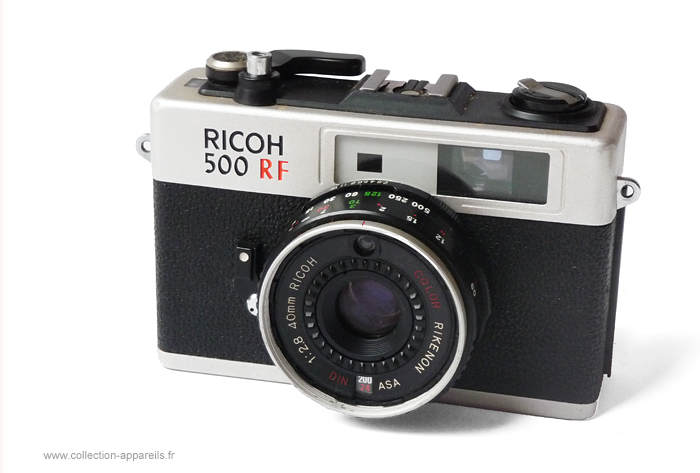
I've been using the Lumx LX3 more in recent months, and in so doing I've experienced something of the pleasure that I used to get from using a rangefinder film camera - in my case the Ricoh 500RF. That particular model had a fixed 40mm lens whilst the LX3 has a relatively short zoom of 24mm-60mm (35mm equiv.). However, I find the handling and the subjects that suit the camera are not too dissimilar. On my recent visit to London I tried the LX3 with a subject I've photographed with the E510 and posted last year - the Millennium Footbridge that crosses the Thames between Tate Modern and St Paul's Cathedral. I passed this location a little later in the day this year, so there was less light. Nonetheless, I thought I'd try the view with a hand-held shot to see how the little camera performed. There's no doubt that a big SLR with a bigger sensor, wider lens and consequent better high ISO capabilities would have secured a sharper, less noisy shot. But, such a camera might have been languishing at home whereas this one is always in my pocket! All things considered I think the LX3 produced quite a good result.

photograph & text (c) T. Boughen

Camera: Lumix LX3
Mode: Aperture Priority
Focal Length: 12.8mm (60mm/35mm equiv.)
F No: f2.8
Shutter Speed: 1/8
ISO: 800
Exposure Compensation: -0.3 EV
Image Stabilisation: On