click photo to enlarge
Maybe it's the photographer in me, but I quite like London in the rain. Certainly the photographs that ensue don't look anything like the tourism shots that are used to promote the city: those glow with sun and blue skies and only tell part of the story. The fact is Britain has a temperate maritime climate that features regular wind and rain that comes in from the Atlantic. And with that rain is the inevitable cloud. So a photograph such as today's is not untypical of the kind of image that a visit to London can produce. Lest I be accused of frightening away potential visitors it needs to be said that the weather changes frequently and quickly, so rain is a temporary inconvenience (or charm).
My photograph shows the most recent version of the London double-decker bus pulling away from a bus stop, a black taxi exiting the frame on the right, people under umbrellas,and a backdrop of part of St Paul's cathedral, Christopher Wren's magnum opus. What I like about shots such as this is the lights, the darkness contrasted with them and the pools of illumination that they provide, the shine of rain on tarmac, and the deep colours. A similar photograph taken a few years ago, but featuring modern architecture, still serves as the desktop photograph on my laptop, a testament to my predilection.
photograph and text © Tony Boughen
Photo Title: Rainy London near St Paul's Cathedral
Camera: Sony RX100
Mode: Aperture Priority
Focal Length: 12.9mm (35mm - 35mm equiv.)
F No: f4
Shutter Speed: 1/40
ISO: 1250
Exposure Compensation: -0.7 EV
Image Stabilisation: On
Showing posts with label St Paul's Cathedral. Show all posts
Wednesday, December 14, 2016
Wednesday, May 01, 2013
Reflections on the Millennium Footbridge, London
click photo to enlarge
The brouhaha that accompanied the opening of London's Millennium Footbridge - it was immediately closed for over a year to correct a wobble induced by large numbers of pedestrians - overshadowed the ambitious nature of the design. Now that it has been in daily use for over a decade the daring of its designer, Norman Foster (assisted by Arup Associates and the sculptor Sir Anthony Caro) is somewhat taken for granted. Consequently I'd like to review just what makes it such an ambitious conception.
The Millennium Footbridge was the first new Thames crossing since the construction of Tower Bridge, and the first ever designed solely for pedestrians. Its novel shape arises from the designers' intention that the views from the bridge of the river and the city should be as clear and as uninterrupted as possible. River traffic and the desire to thrill produced a central span of 320 metres. Only two supports are placed in the water, quite close to the banks. These are elegant "Y" shapes. Looking at the structure it's not immediately apparent that it is, essentially, a suspension bridge. The cables are not slung in the usual manner and closely follow the contour of the deck, never rising more than 7 feet 6 inches (2.3 metres) above it.
The bridge looks slight but strong. It is highly popular with people and makes the journey from St Paul's Cathedral to Tate Modern and the South Bank (and vice versa) a dramatic and exciting walk. My main photograph is taken from the point where a slope up from the south bank riverside walk splits and then rejoins and the footbridge arcs up and over the Thames. I've photographed the bridge before, including from that same viewpoint - see here and here.
photograph and text © Tony Boughen
Photo 1
Camera: Sony RX100
Mode: Aperture Priority
Focal Length: 18.5mm (50mm - 35mm equiv.)
F No: f6.3
Shutter Speed: 1/400
ISO: 125
Exposure Compensation: -0.3 EV
Image Stabilisation: On
The brouhaha that accompanied the opening of London's Millennium Footbridge - it was immediately closed for over a year to correct a wobble induced by large numbers of pedestrians - overshadowed the ambitious nature of the design. Now that it has been in daily use for over a decade the daring of its designer, Norman Foster (assisted by Arup Associates and the sculptor Sir Anthony Caro) is somewhat taken for granted. Consequently I'd like to review just what makes it such an ambitious conception.
The Millennium Footbridge was the first new Thames crossing since the construction of Tower Bridge, and the first ever designed solely for pedestrians. Its novel shape arises from the designers' intention that the views from the bridge of the river and the city should be as clear and as uninterrupted as possible. River traffic and the desire to thrill produced a central span of 320 metres. Only two supports are placed in the water, quite close to the banks. These are elegant "Y" shapes. Looking at the structure it's not immediately apparent that it is, essentially, a suspension bridge. The cables are not slung in the usual manner and closely follow the contour of the deck, never rising more than 7 feet 6 inches (2.3 metres) above it.
The bridge looks slight but strong. It is highly popular with people and makes the journey from St Paul's Cathedral to Tate Modern and the South Bank (and vice versa) a dramatic and exciting walk. My main photograph is taken from the point where a slope up from the south bank riverside walk splits and then rejoins and the footbridge arcs up and over the Thames. I've photographed the bridge before, including from that same viewpoint - see here and here.
photograph and text © Tony Boughen
Photo 1
Camera: Sony RX100
Mode: Aperture Priority
Focal Length: 18.5mm (50mm - 35mm equiv.)
F No: f6.3
Shutter Speed: 1/400
ISO: 125
Exposure Compensation: -0.3 EV
Image Stabilisation: On
Labels:
bridge,
design,
London,
Millennium Footbridge,
River Thames,
St Paul's Cathedral
Friday, November 20, 2009
In praise of pocket cameras
click photo to enlargeAll through my adult life I've used single lens reflex cameras (film then digital) alongside a pocketable compact camera (also film, then digital). At times I've concentrated on the smaller camera and given the heavier and bulkier SLR a break. There are those who can see no advantage in using a camera that offers less detailed output and is more restrictive in the subjects that it can deal with. However, the discipline of composing images with a restricted focal length lens fixed to a device that can accompany you with ease everywhere that you go is quite liberating; something that takes you back to the earlier days of photography, and makes you really think about your subjects and, especially, your compositions. And, for those who can't envisage life without a wide-range zoom lens, don't forget that a single focal length lens will zoom: all you have to do is walk forwards or backwards!
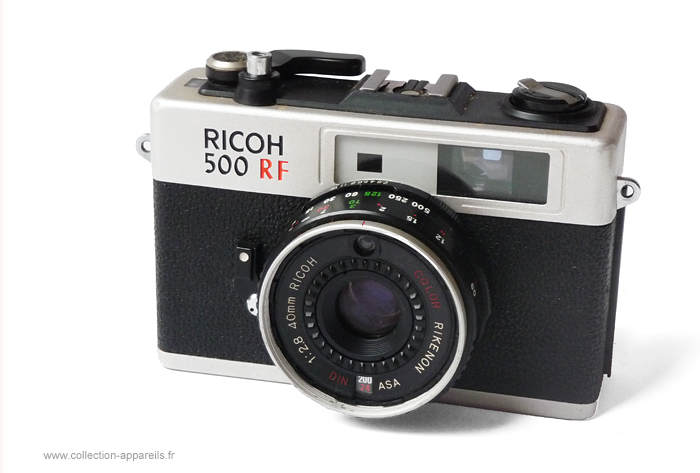
I've been using the Lumx LX3 more in recent months, and in so doing I've experienced something of the pleasure that I used to get from using a rangefinder film camera - in my case the Ricoh 500RF. That particular model had a fixed 40mm lens whilst the LX3 has a relatively short zoom of 24mm-60mm (35mm equiv.). However, I find the handling and the subjects that suit the camera are not too dissimilar. On my recent visit to London I tried the LX3 with a subject I've photographed with the E510 and posted last year - the Millennium Footbridge that crosses the Thames between Tate Modern and St Paul's Cathedral. I passed this location a little later in the day this year, so there was less light. Nonetheless, I thought I'd try the view with a hand-held shot to see how the little camera performed. There's no doubt that a big SLR with a bigger sensor, wider lens and consequent better high ISO capabilities would have secured a sharper, less noisy shot. But, such a camera might have been languishing at home whereas this one is always in my pocket! All things considered I think the LX3 produced quite a good result.
photograph & text (c) T. Boughen
Camera: Lumix LX3
Mode: Aperture Priority
Focal Length: 12.8mm (60mm/35mm equiv.)
F No: f2.8
Shutter Speed: 1/8
ISO: 800
Exposure Compensation: -0.3 EV
Image Stabilisation: On
Friday, October 17, 2008
The Millennium Bridge, London
The Millennium Bridge opened in June 2000. It crosses the River Thames between St Paul's Cathedral and Tate Modern, and was the first new bridge to span the river in the city since the opening of Tower Bridge in 1894.
The structure is a footbridge 325 metres long and 4 metres wide, with two "Y" shaped supports in the water. The designers, Arup, Foster and Partners, gave the bridge a low profile to improve the view, and the suspension design was unusual in having the main cables below the pedestrian deck. It was made to carry a load of 5,000 people, and on the day of opening registered a maximum of about 2,000 at any one time and a total of about 90,000 in the 24 hour period. Immediately it was used by the public this elegant bridge was found to have lateral movement (known as resonant structural response) caused by the interaction of pedestrian movement and bridge oscillation. The public liked the slightly unnerving effect and soon gave it the nickname of "The Wobbly Bridge"! However, it was fixed by fitting fluid-viscous dampers and tuned mass dampers to control the horizontal and vertical movement, and passage over it is now much less of a white-knuckle ride!
The Millennium Bridge has proved to be a very popular crossing point between Bankside (Tate Modern and The Globe Theatre) and the City in the area of St Paul's Cathedral. It's also become a great attraction to photographers. I've photographed it a number of times over the years, but on my most recent visit to the capital I thought I'd have a go at dusk to test the effectiveness of my camera's image stabilisation system and high ISOs. The first shot was taken later than the second at ISO 1600, and though it had visible noise cleaned up quite well, though not as effectively as the other image at ISO 800. Both shots were hand-held at 1/5 second, and whilst at 100% viewing are not as sharp as if they'd been shot at a more reasonable speed, or with a tripod, both look like they'll produce an acceptable print up to 10X8 or maybe 12X8 inches, though the lower ISO image with more detail.
Top Image
Camera: Olympus E510
Mode: Aperture Priority
Focal Length: 42mm (84mm/35mm equiv.)
F No: f5.6
Shutter Speed: 1/5
ISO: 1600
Exposure Compensation: -1.3 EV
Image Stabilisation: On
Bottom Image
Camera: Olympus E510
Mode: Aperture Priority
Focal Length: 22mm (44mm/35mm equiv.)
F No: f3.5
Shutter Speed: 1/5
ISO: 800
Exposure Compensation: -1.3 EV
Image Stabilisation: On
The structure is a footbridge 325 metres long and 4 metres wide, with two "Y" shaped supports in the water. The designers, Arup, Foster and Partners, gave the bridge a low profile to improve the view, and the suspension design was unusual in having the main cables below the pedestrian deck. It was made to carry a load of 5,000 people, and on the day of opening registered a maximum of about 2,000 at any one time and a total of about 90,000 in the 24 hour period. Immediately it was used by the public this elegant bridge was found to have lateral movement (known as resonant structural response) caused by the interaction of pedestrian movement and bridge oscillation. The public liked the slightly unnerving effect and soon gave it the nickname of "The Wobbly Bridge"! However, it was fixed by fitting fluid-viscous dampers and tuned mass dampers to control the horizontal and vertical movement, and passage over it is now much less of a white-knuckle ride!
The Millennium Bridge has proved to be a very popular crossing point between Bankside (Tate Modern and The Globe Theatre) and the City in the area of St Paul's Cathedral. It's also become a great attraction to photographers. I've photographed it a number of times over the years, but on my most recent visit to the capital I thought I'd have a go at dusk to test the effectiveness of my camera's image stabilisation system and high ISOs. The first shot was taken later than the second at ISO 1600, and though it had visible noise cleaned up quite well, though not as effectively as the other image at ISO 800. Both shots were hand-held at 1/5 second, and whilst at 100% viewing are not as sharp as if they'd been shot at a more reasonable speed, or with a tripod, both look like they'll produce an acceptable print up to 10X8 or maybe 12X8 inches, though the lower ISO image with more detail.
photographs & text (c) T. Boughen
Top Image
Camera: Olympus E510
Mode: Aperture Priority
Focal Length: 42mm (84mm/35mm equiv.)
F No: f5.6
Shutter Speed: 1/5
ISO: 1600
Exposure Compensation: -1.3 EV
Image Stabilisation: On
Bottom Image
Camera: Olympus E510
Mode: Aperture Priority
Focal Length: 22mm (44mm/35mm equiv.)
F No: f3.5
Shutter Speed: 1/5
ISO: 800
Exposure Compensation: -1.3 EV
Image Stabilisation: On
Subscribe to:
Posts (Atom)