Showing posts with label pocket cameras. Show all posts

Friday, November 20, 2009

In praise of pocket cameras

click photo to enlarge
All through my adult life I've used single lens reflex cameras (film then digital) alongside a pocketable compact camera (also film, then digital). At times I've concentrated on the smaller camera and given the heavier and bulkier SLR a break. There are those who can see no advantage in using a camera that offers less detailed output and is more restrictive in the subjects that it can deal with. However, the discipline of composing images with a restricted focal length lens fixed to a device that can accompany you with ease everywhere that you go is quite liberating; something that takes you back to the earlier days of photography, and makes you really think about your subjects and, especially, your compositions. And, for those who can't envisage life without a wide-range zoom lens, don't forget that a single focal length lens will zoom: all you have to do is walk forwards or backwards!

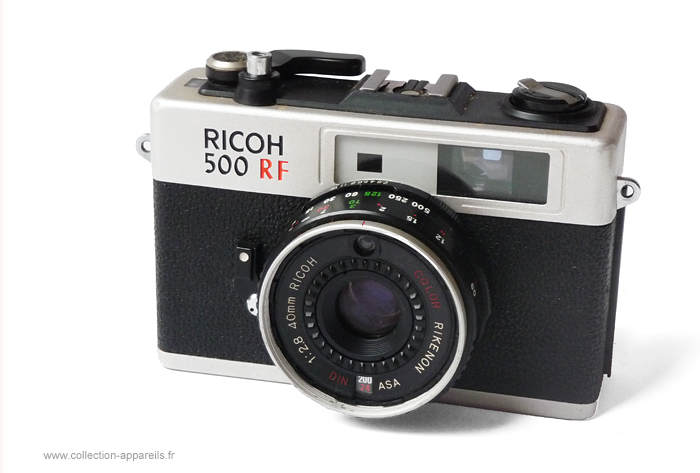
I've been using the Lumx LX3 more in recent months, and in so doing I've experienced something of the pleasure that I used to get from using a rangefinder film camera - in my case the Ricoh 500RF. That particular model had a fixed 40mm lens whilst the LX3 has a relatively short zoom of 24mm-60mm (35mm equiv.). However, I find the handling and the subjects that suit the camera are not too dissimilar. On my recent visit to London I tried the LX3 with a subject I've photographed with the E510 and posted last year - the Millennium Footbridge that crosses the Thames between Tate Modern and St Paul's Cathedral. I passed this location a little later in the day this year, so there was less light. Nonetheless, I thought I'd try the view with a hand-held shot to see how the little camera performed. There's no doubt that a big SLR with a bigger sensor, wider lens and consequent better high ISO capabilities would have secured a sharper, less noisy shot. But, such a camera might have been languishing at home whereas this one is always in my pocket! All things considered I think the LX3 produced quite a good result.

photograph & text (c) T. Boughen

Camera: Lumix LX3
Mode: Aperture Priority
Focal Length: 12.8mm (60mm/35mm equiv.)
F No: f2.8
Shutter Speed: 1/8
ISO: 800
Exposure Compensation: -0.3 EV
Image Stabilisation: On

Monday, December 15, 2008

Reeds, ripples and reflections

click photo to enlarge
I sometimes wonder if I should get a Holga. Given some of the images I'm starting to produce, where colour fidelity, sharpness, clarity and depth are of little consequence, the features offered by a DSLR sometimes seem like overkill. A small, cheap, black box, with a simple, fixed-focus lens, producing images that are all imbued with the same characteristics has its attractions. Of course a Holga uses film, and digital is much more convenient.

I've used an SLR since the early 1970s, but for most of that time I've also owned a smaller, fixed lens camera to carry when something larger is inconvenient or inappropriate. Of all such cameras that I've had the one I look back on with most affection is the Ricoh 500RF - a 35mm rangefinder with a fixed 40mm f2.8 lens that I used for about 15 years. This produced images far better than it had any right to, and served me well shooting slide film and black and white for architecture, and colour film for family snapshots. The discipline of the fixed lens was good - zooming involved walking - and the rangefinder focussing was very easy and convenient. It was a camera that forced me back to photography's basics, and helped me see images where previously I hadn't. I was sorry when it died. Today I have a Fuji E900 that I picked up a few years ago, fairly cheaply, after it had been superseded by other models. It has a 32-128mm (35mm equiv.) f2.8-f5.6 lens, offers RAW, and is capable of producing some pretty good images. I use it less than I might, but perhaps winter shots of the sort posted above are within its range. My self-imposed Olympus burden that accompanies each walk is probably due for some time off.

Today's semi-abstract photographs show more reflected reeds shot with deliberately slow shutter speeds to introduce blur. Not everyone's cup of tea I suppose, especially those die-hard DSLR users who seem to value sharpness in an image above most other qualities. But I like them!

photographs & text (c) T. Boughen

Top Image
Camera: Olympus E510
Mode: Aperture Priority
Focal Length: 150mm (300mm/35mm equiv.)
F No: f7.1
Shutter Speed: 1/25
ISO: 100
Exposure Compensation: -0.3 EV
Image Stabilisation: Off

Bottom Image
Camera: Olympus E510
Mode: Aperture Priority
Focal Length: 110mm (220mm/35mm equiv.)
F No: f14
Shutter Speed: 1/3
ISO: 100
Exposure Compensation: -0.3 EV
Image Stabilisation: On