Showing posts with label sails. Show all posts

Friday, November 14, 2014

Six sails at Sibsey

click photo to enlarge
The other day, when speaking about the eight sailed Heckington windmill, I mentioned the 6-sailer that is Sibsey Trader Mill. I suggested that six sails is less visually satisfying than four or five but better than eight. On our recent visit to Skegness we came home via Sibsey and stopped in at the mill for a cup of tea. And in so doing, I took the opportunity to check whether another viewing would confirm my judgement. It did.


Now that's not to say that there isn't plenty of interest in a windmill, regardless of the number of its sails: there clearly is, both outside and inside. On this particular occasion my photographs of the windmill in its setting were less than satisfactory due to the blank blue sky and the scatter of colourful cars parked at the base of the mill. However, I took a few detail photographs and here are a couple. The shot of the sails, cap and fantail is one that I often take when I visit a windmill. It shows off the intricate woodwork and metal work and fills the frame nicely. The other shot was one that I noticed when we climbed up and down the ladders that connect the several floors. It brought together, so I thought, two themes that I often return to in my photography - window views and shadows. Incidentally I extend my apologies for the tongue-twister title of this post.

photograph and text © Tony Boughen

Photo 1
Camera: Nikon D5300
Mode: Aperture Priority
Focal Length: 66mm (99mm - 35mm equiv.)
F No: f8
Shutter Speed: 1/160 sec
ISO:100
Exposure Compensation: -0.33 EV
Image Stabilisation: On

Thursday, November 06, 2014

Beauty and Heckington windmill

click photo to enlarge
It's good that Heckington windmill, the last remaining 8-sail windmill, is undergoing a restoration, and that the buildings around it are being refurbished and remodelled to make the site into a place that can better welcome visitors. It's good too that the rear of the premises will no longer be the eyesore that it has been for many years. And, it's good that the sails that were succumbing to rot have been replaced and are as they should be. All this is a testament to the hard work and selfless effort of the volunteers who have made, and continue to make, it happen.

However, as I view the mill from the A17 when I'm driving past, or when I stop off in Heckington and have a closer view of the building an unfortunate yet inescapable thought always occurs to me - Heckington mill is undoubtedly the least visually pleasing English windmill that I know.

I recently saw, on successive days, Heckington windmill then Boston's Maud Foster windmill. The temporal proximity of my viewings brought home the agreeable elegance of the latter (probably my favourite windmill) and the ungainliness of Heckington. Where Maud Foster has warm, subtly coloured brickwork contrasting with the white of sails, cap, gallery, windows etc and visually interesting subsidiary buildings, Heckington has cold, stark black and white and seems to tower in an awkward way over a disconnected jumble of sheds. I'm sure the redevelopment will improve the latter aspect. However, it is Heckington's main distinguishing feature that I find most displeasing - eight sails. It is simply too many, makes the mill look top heavy and gives the building something of the character of a whirring desk fan - even when it's stationary! By contrast, the five sails of Maud Foster seem to be the ideal number offering visual interest, pleasing angles and less visual weight.  Four sails are very common on English windmills and usually look fine, six sails are less common and that number is beginning to lose the coherence that characterises fewer sails. Five sails are also less frequently seen than four but that number is definitely - to my mind - the optimum: eight is simply far too many!

photograph and text © Tony Boughen

Camera: Nikon D5300
Mode: Aperture Priority
Focal Length: 20mm (30mm - 35mm equiv.)
F No: f8
Shutter Speed: 1/250 sec
ISO:100
Exposure Compensation: -0.33 EV
Image Stabilisation: On

Saturday, October 19, 2013

Maud Foster, photographic filters and sails

click photo to enlarge
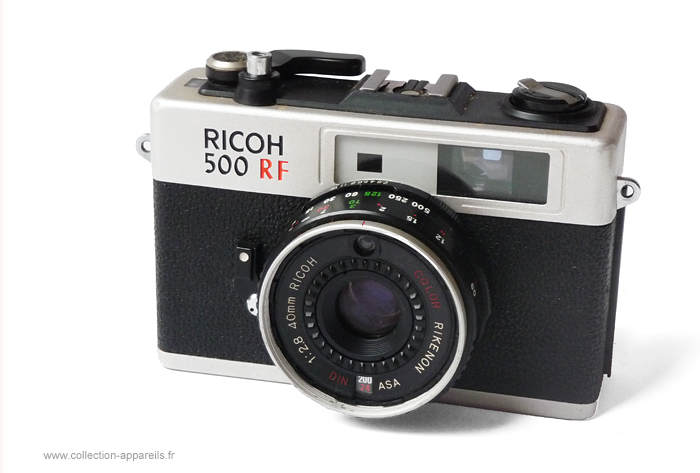
There was a time, from the late 1970s to some time in the 1990s when my Olympus OM1n's lens, usually a 50mm 1.8, but sometimes a 135mm 2.8, was rarely seen without a yellow, orange or red filter screwed on to it. For my personal (as opposed to family) photography, I did a lot of black and white work, and the boost in contrast that this gave to Ilford FP4 suited me fine. I occasionally fitted one to my little Ricoh 500RF but I more usually shot colour - Fujichrome and Ektachrome - with that camera, so a polarising filter suited it best. One of the pleasures of the change from film to digital is the ability to mimic the effect of a one of these filters after a colour shot has been converted to black and white. Today's main photograph shows just that. In this instance the digital equivalent of a yellow filter has been applied. This won't be to the liking of some purists, but I'm very happy with it.

I've photographed the Maud Foster windmill in Boston, Lincolnshire, several times and posted a few of my better shots on the blog. It's named after the big agricultural drain on whose bank it stands, and is one of the most attractive mills that I know - elegant, tall, with lovely brick and interesting ancillary buildings. On this occasion, however, it wasn't its overall appeal that I reflected on; I got to thinking about its sails. It is relatively unusual in having 5, an odd number. An even number of sails was more often favoured, usually 4, 6 or 8, because with this configuration, the argument goes, opposing sails can be removed for repair or maintenance and the windmill retains balance. Now, for reasons that I find hard to put into words I find 5 sails very visually satisfying. Better than the four that is most often seen, and better too than six - which I don't dislike. Definitely an improvement on eight, a number that makes a windmill look like a desk fan - yes Heckington windmill, I'm thinking of you. Perhaps its the anthropomorphic form of the 5-sailer that appeals - a reminder of Leonardo's Vitruvian man. As I say, I can't articulate these likes and dislikes particularly well, any more than I can account for my preferring a two button jacket over a three button version, but it's definitely how I see things.

photograph and text © Tony Boughen

Photo 1
Camera: Sony RX100
Mode: Aperture Priority
Focal Length: 10.4mm (28mm - 35mm equiv.)
F No: f7.1
Shutter Speed: 1/400
ISO: 125
Exposure Compensation:  -0.3 EV
Image Stabilisation: On

Saturday, April 21, 2012

Old windmill, new sails

click photo to enlarge
I hadn't anticipated dull and dreary skies when we decided we'd visit Moulton windmill to see its new sails. After all, the forecast was for sunshine and showers. But, as we sat and ate our lunch and heavy drops of rain started to fall I began to fear the worst. Even as we journeyed the few short miles to the mill, the tallest in England, I retained a lingering hope that a patch of clear, or at least interesting sky would coincide with our time there. And it did. Unfortunately it was when we were inside the mill having a guided tour! Consequently the shots of the exterior that I'd hoped for didn't materialise, and the photograph above, taken from the external fourth floor reefing gallery (balcony), is the only one that I took of the new sails that is worth reproducing. However, I did get a photograph of Moulton church from the same balcony, and I include a photograph of the mill's stones that I took on a previous visit.

The original sails of Moulton windmill were removed after they were damaged in a gale in 1894, a severe "blow" that inflicted injury on a number of Lincolnshire mills. In subsequent years the millstones were powered by steam, diesel, then electricity, before milling finally ended in 1995. The charitable trust that acquired the mill set themselves the task of restoring it to the point where it could begin wind-powered milling again as a tourist attraction The most important step on that journey was accomplished on 21st November 2011 when new sails were fitted. The next step will be taken on 29th April 2012 when, wind permitting, the sails will be allowed to turn. Then, on 5th May 2012 (also wind permitting) milling will be undertaken. The resulting bags of flour are to be sold to visitors and local businesses.

Over the years I've looked at a number of windmills, read a few books on the subject, and increased my understanding of these buildings/machines. However, on my recent visit to Moulton I clarified a point that I was unclear about concerning millstones. I've seen many circular millstones that are made of a single piece of stone, and many that are made with a number of interlocking pieces of stone that are held together with iron bands around the rim. Why the difference? Apparently most of the single stones are older, Derbyshire gritstone examples. The pieced millstones are made of French stone that originally came into the country as ballast in ships. The latter could be assembled very quickly whilst the former had to be ordered years in advance and cut out of the outcrops on the Derbyshire moors. Clearly the assembled stones were cheaper, could be ordered nearer to the time they were required, and were as good if not better than the locally sourced stones. Moulton has examples of both kinds.

photograph and text (c) T. Boughen

Photo 1
Camera: Canon
Mode: Aperture Priority
Focal Length: 24mm
 F No: f7.1
Shutter Speed: 1/500 sec
ISO: 100
Exposure Compensation:  -0.67 EV
Image Stabilisation: On